
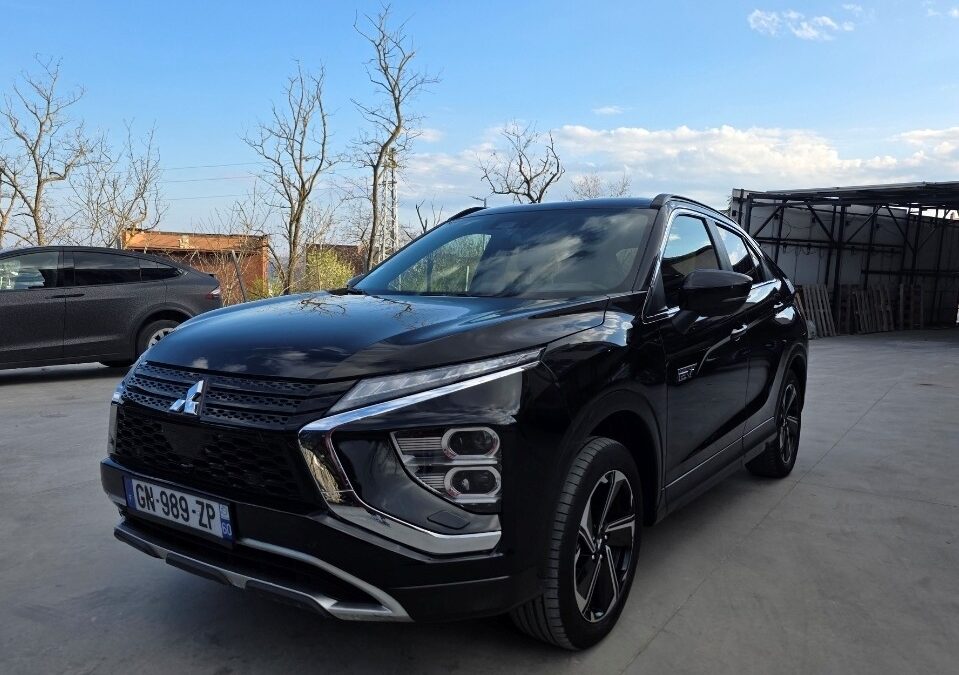
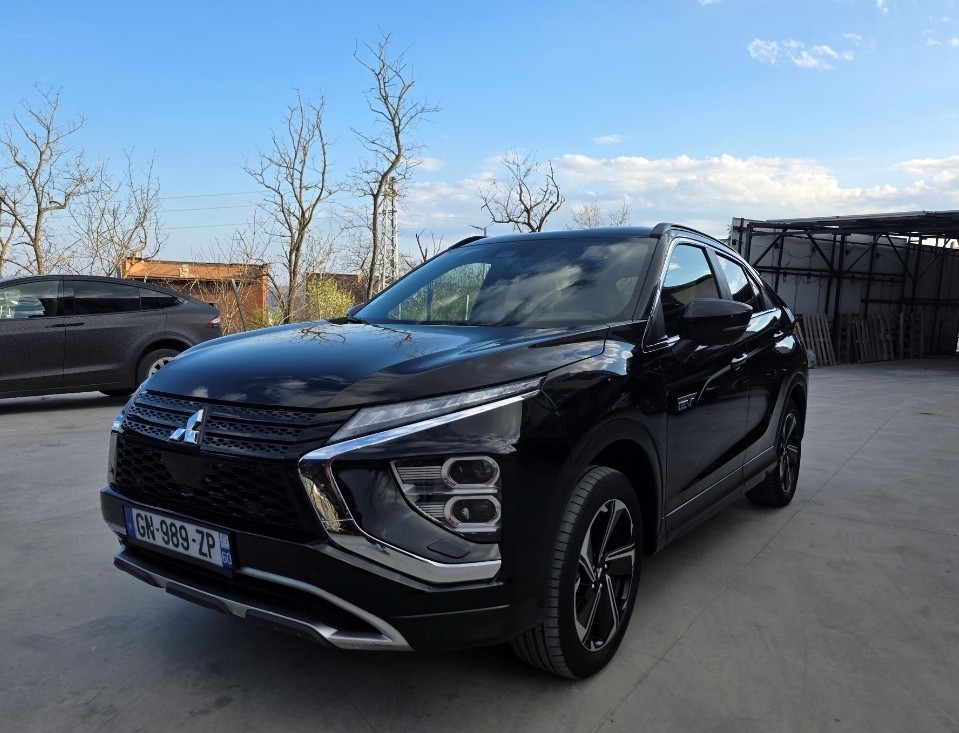
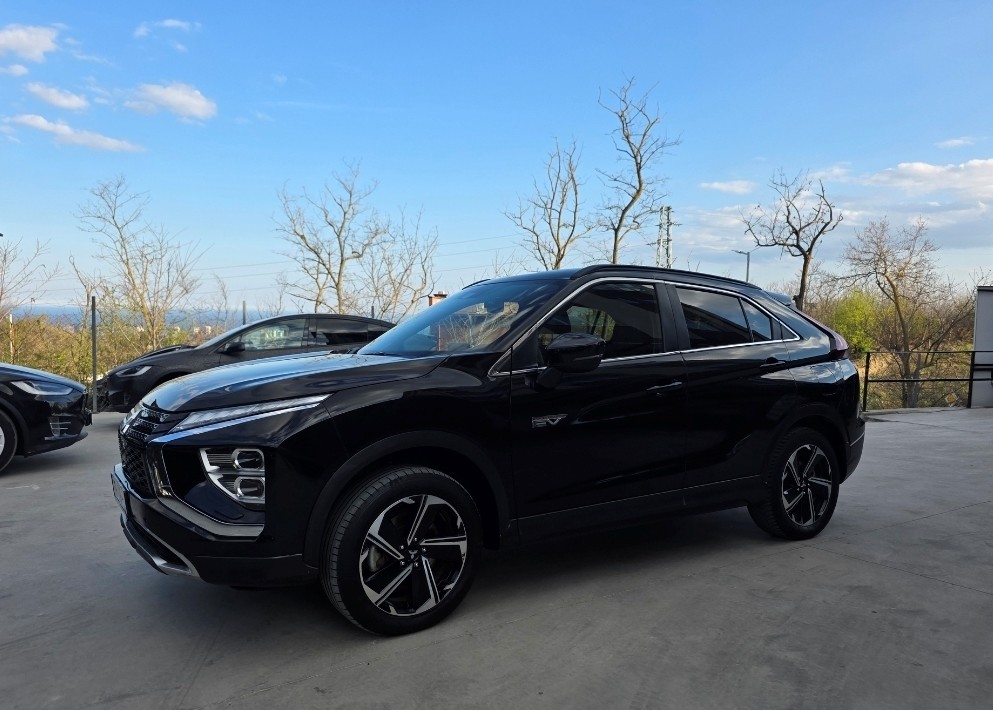
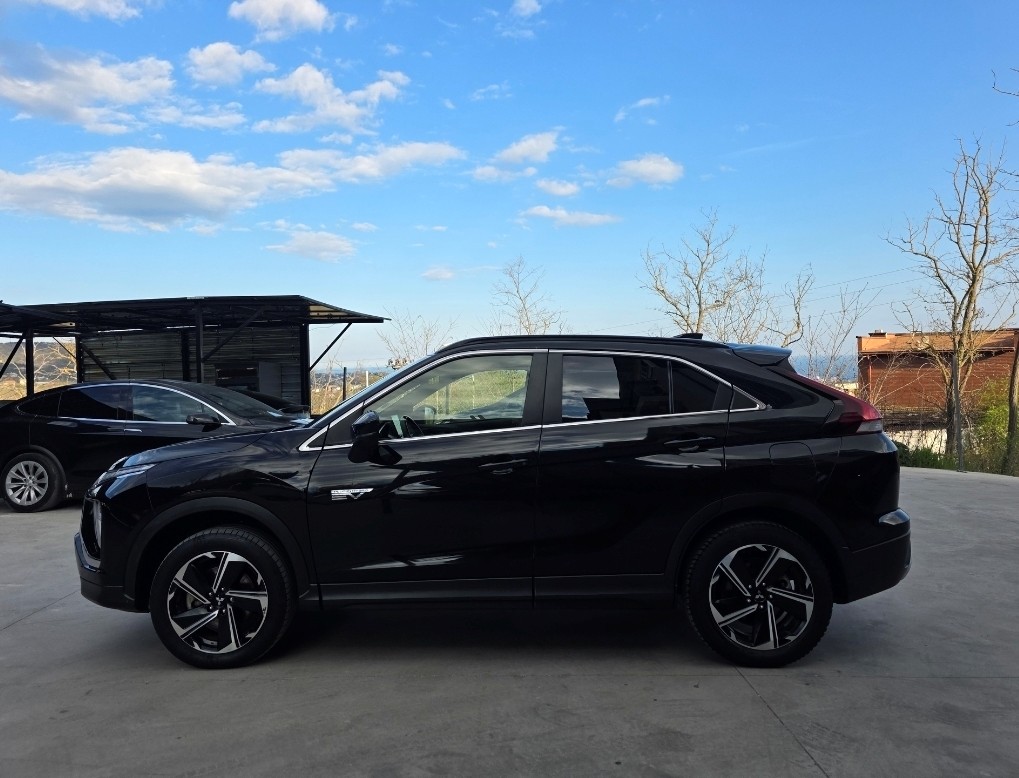
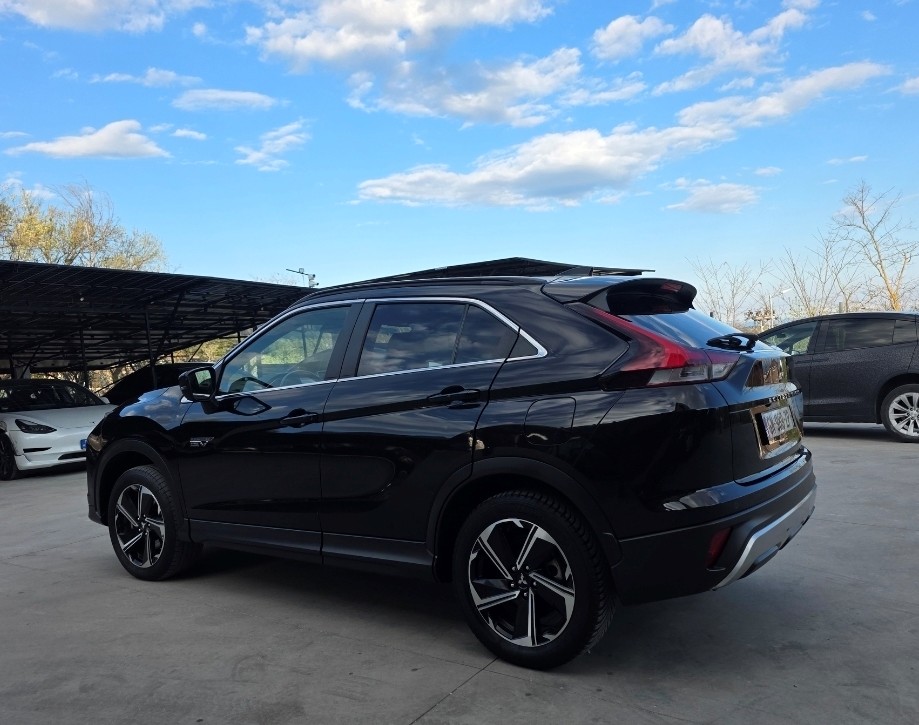
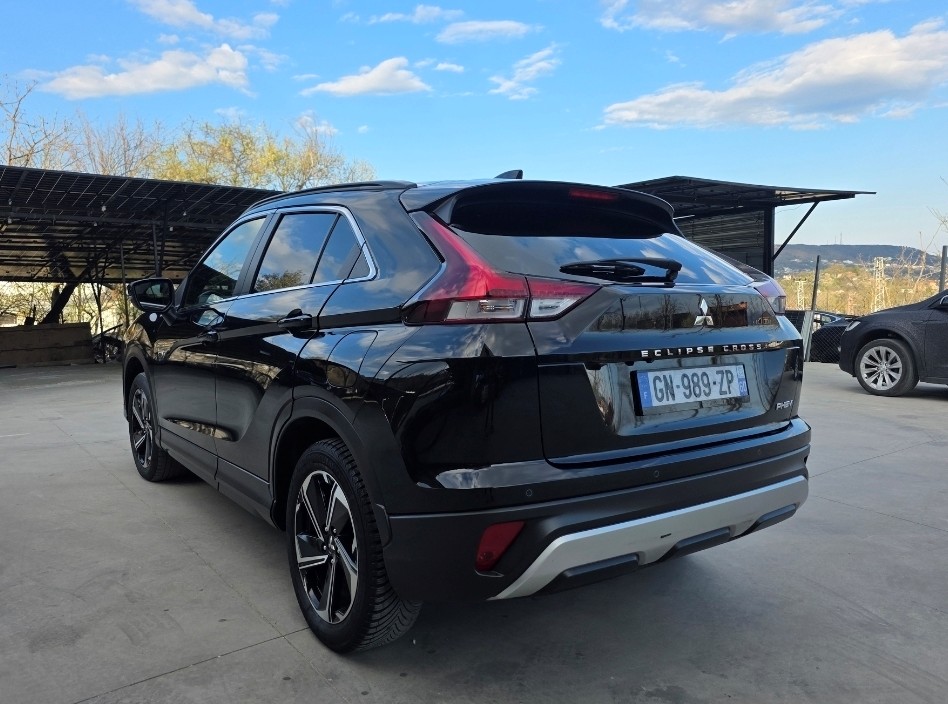
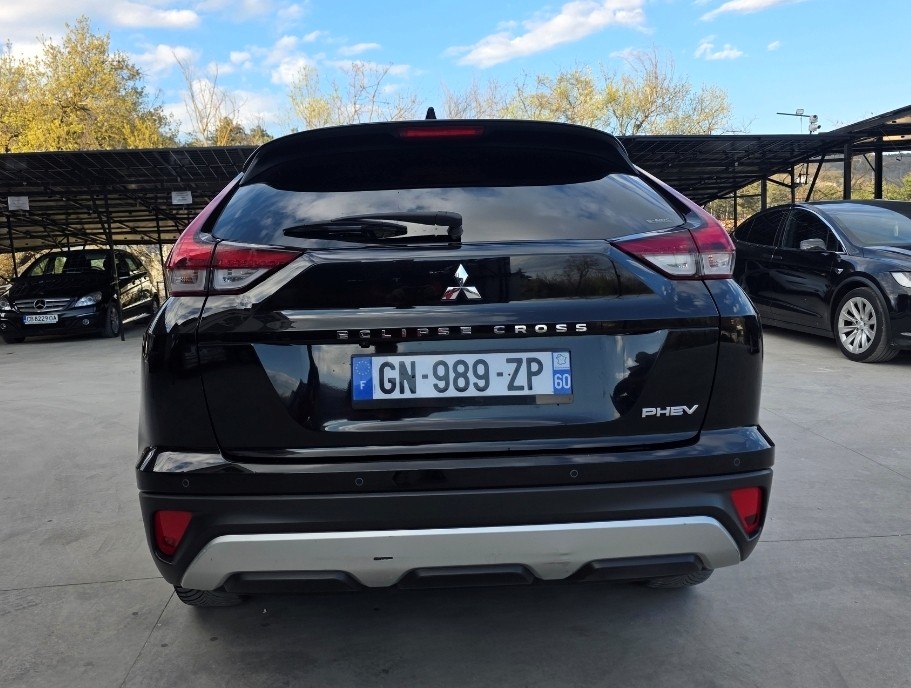
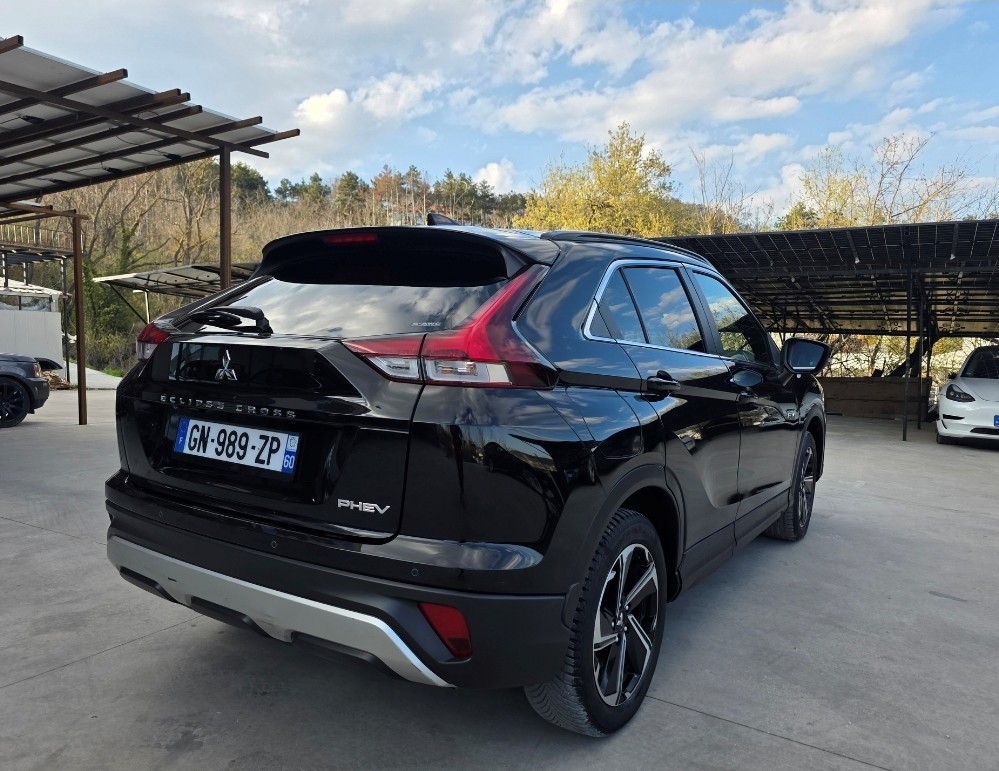
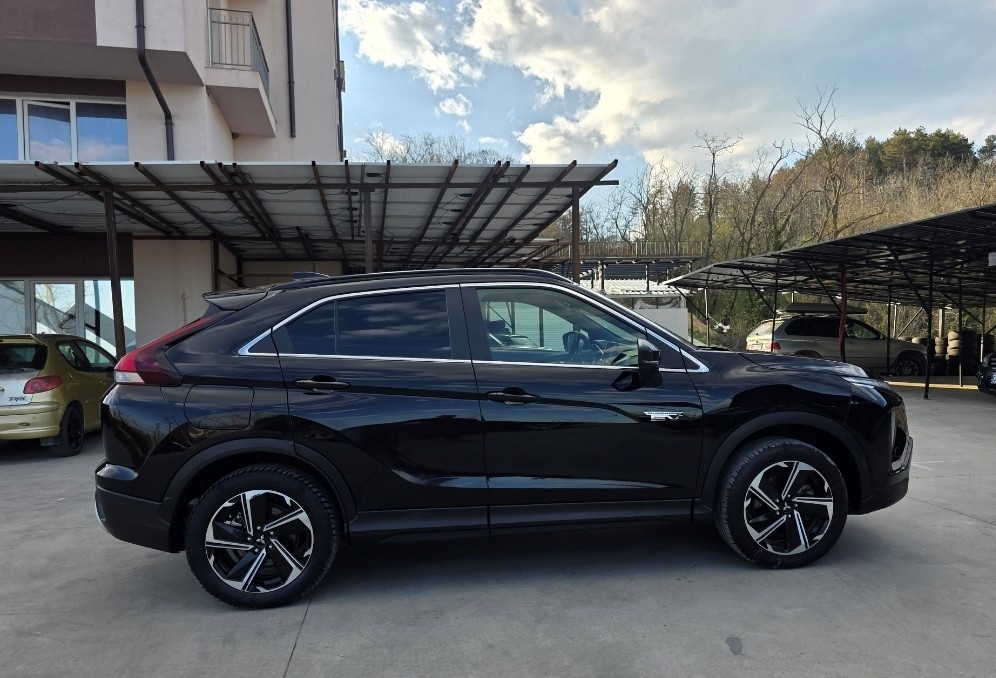
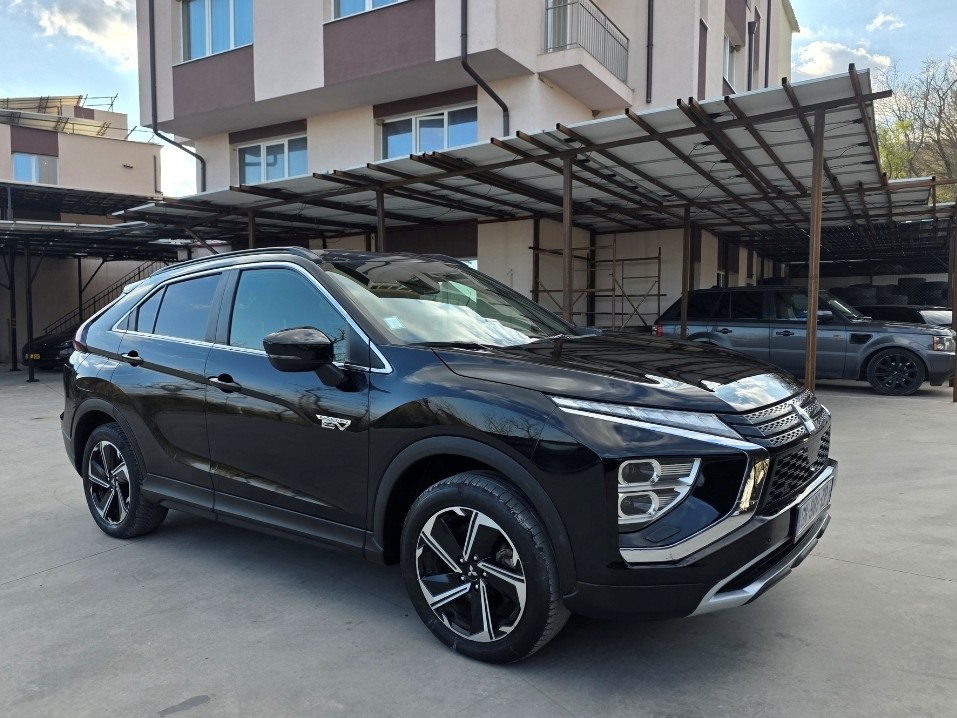
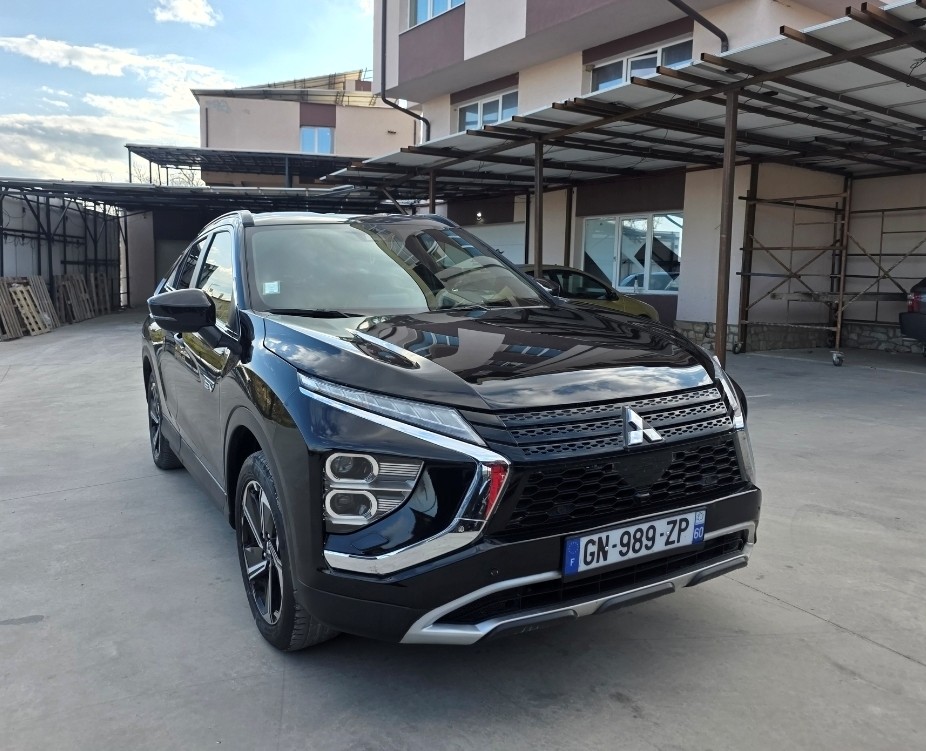
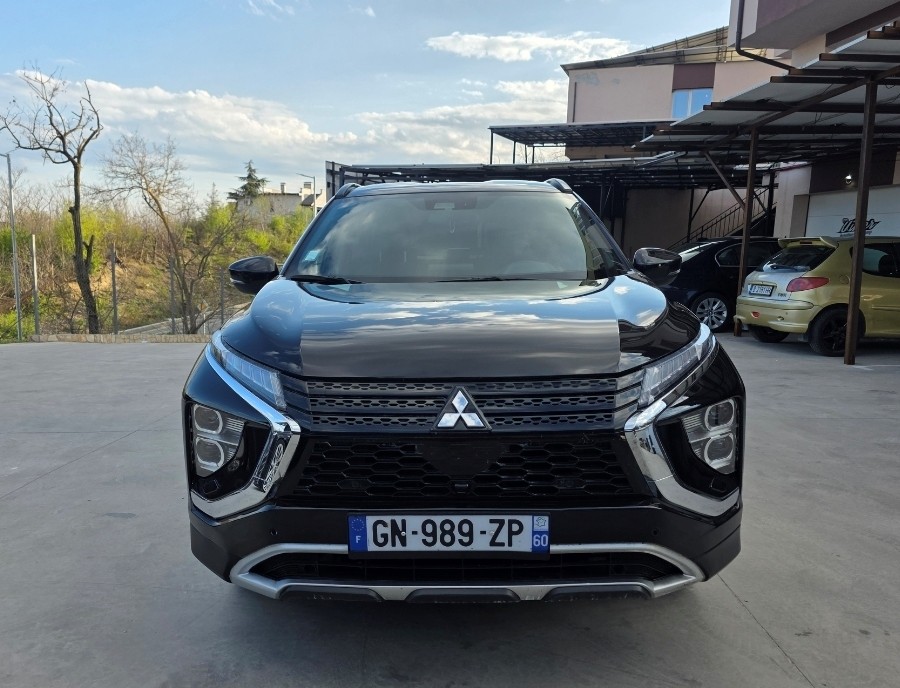
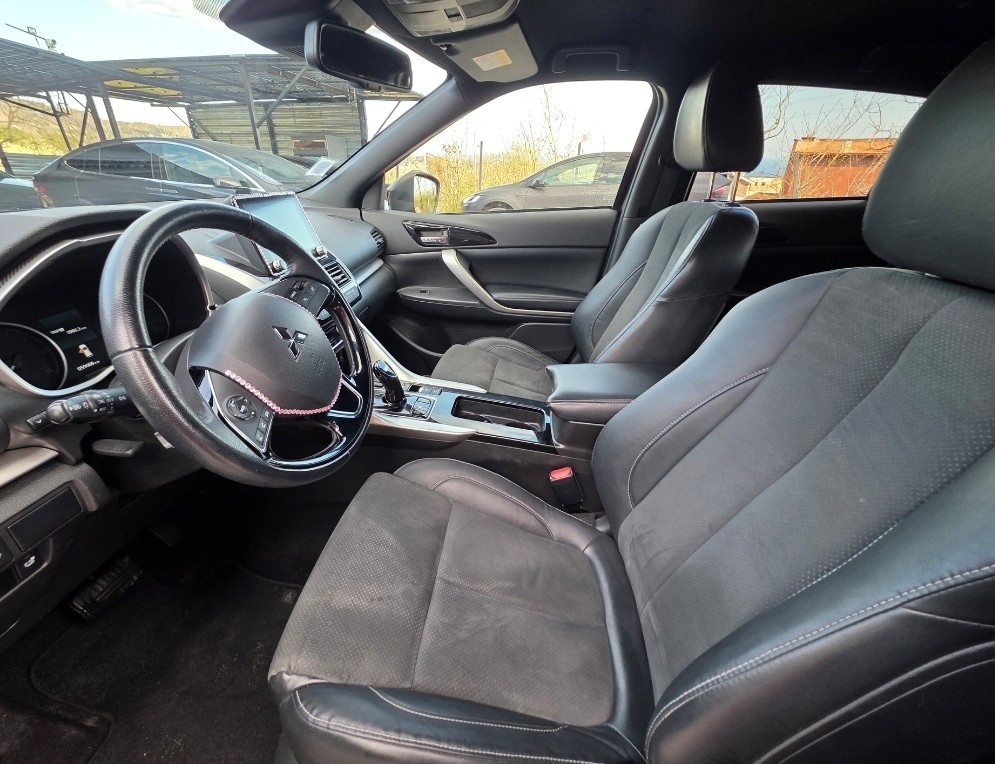
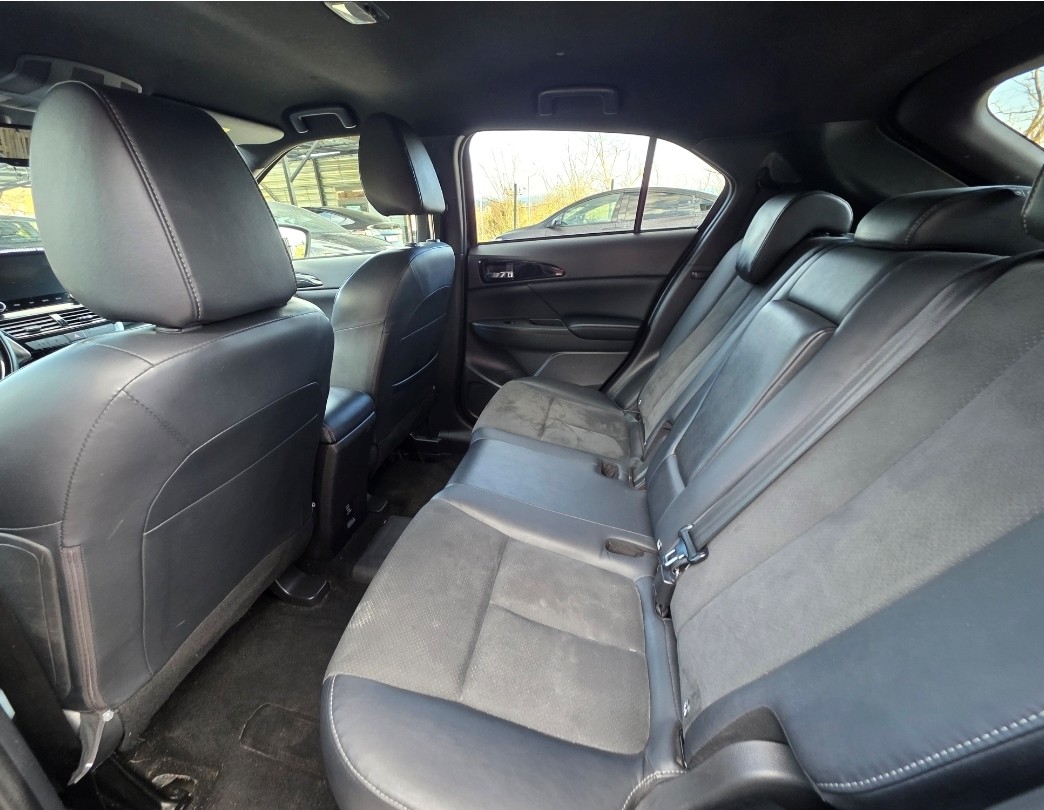
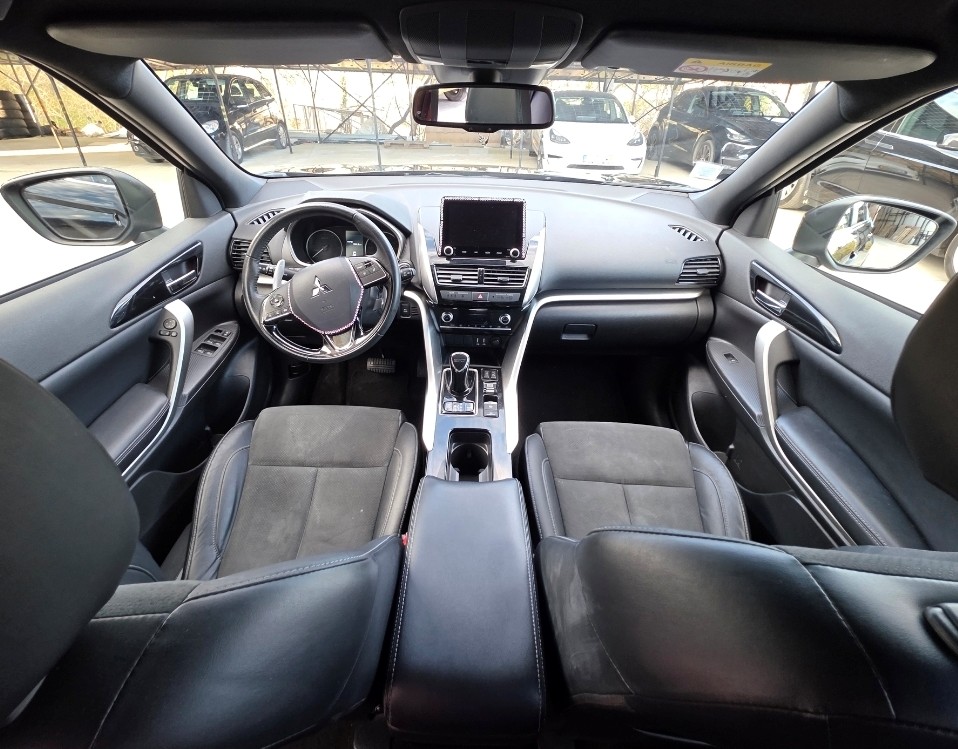
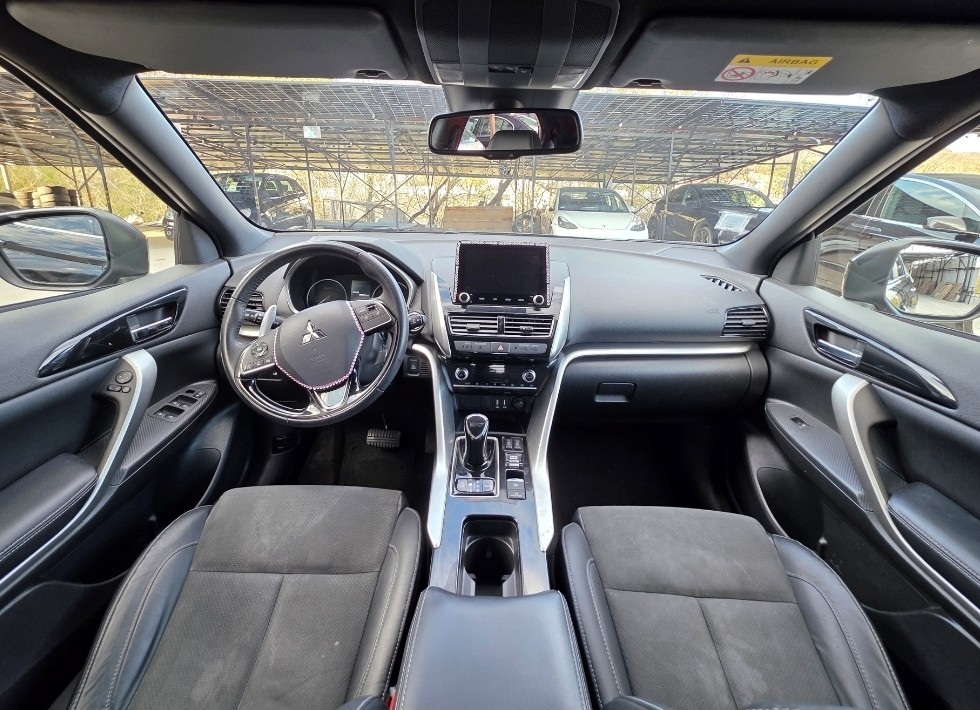
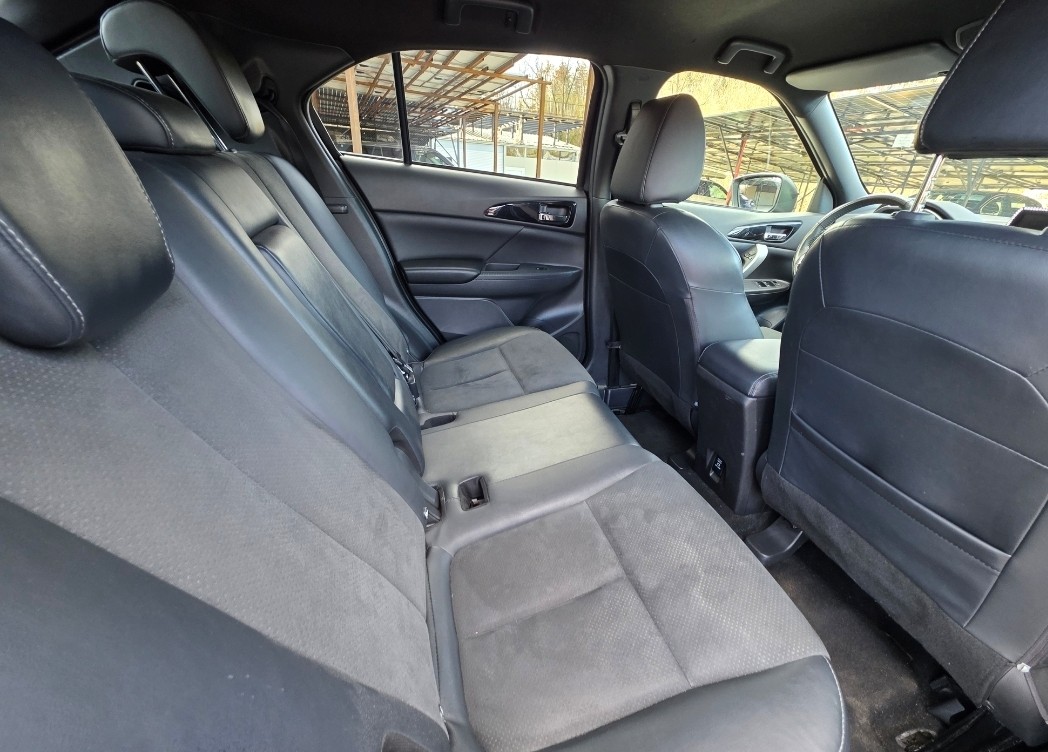
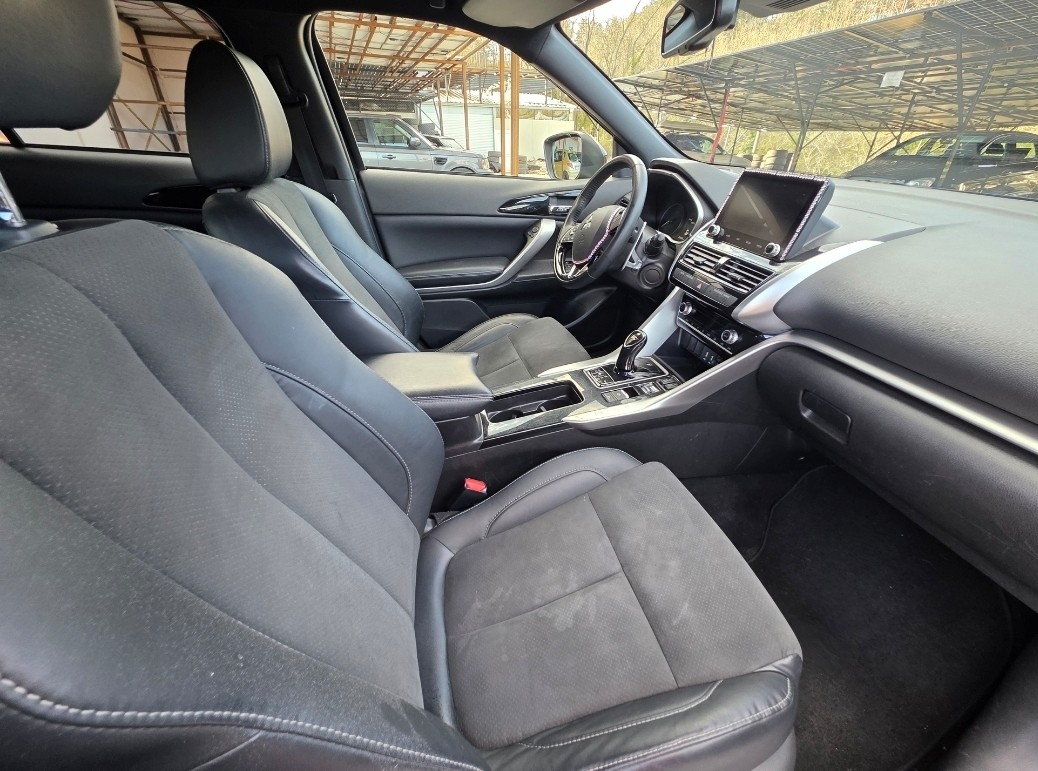
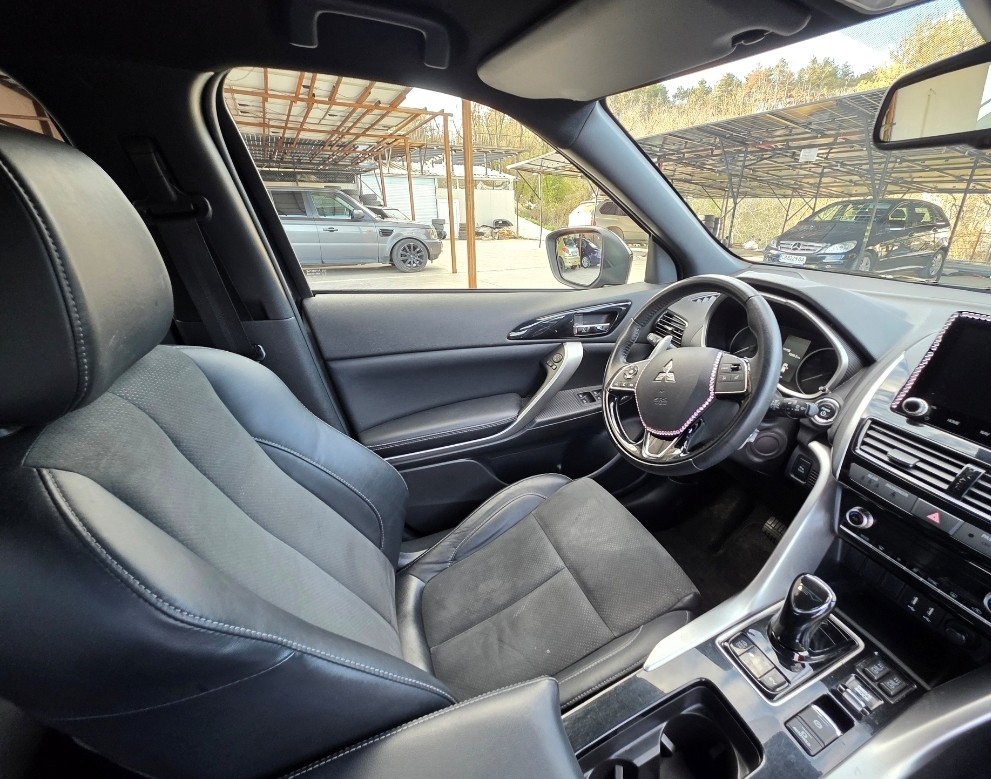
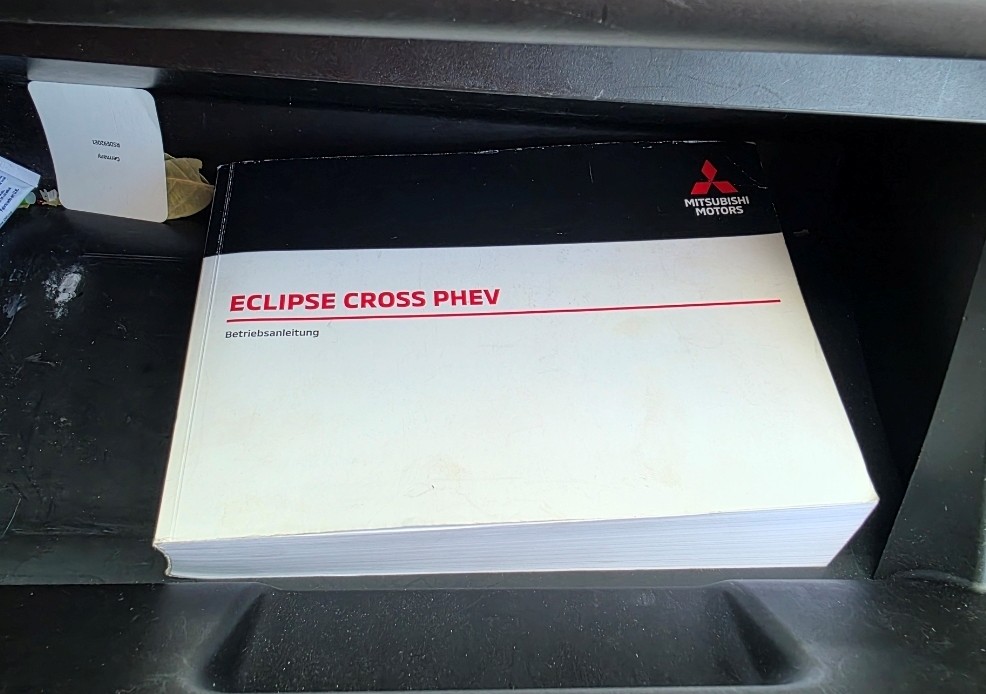
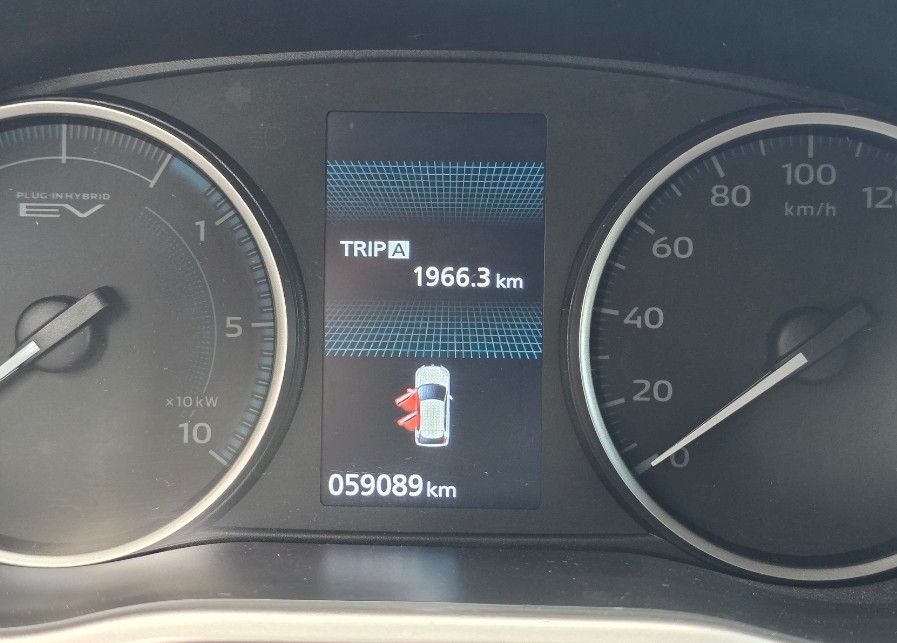
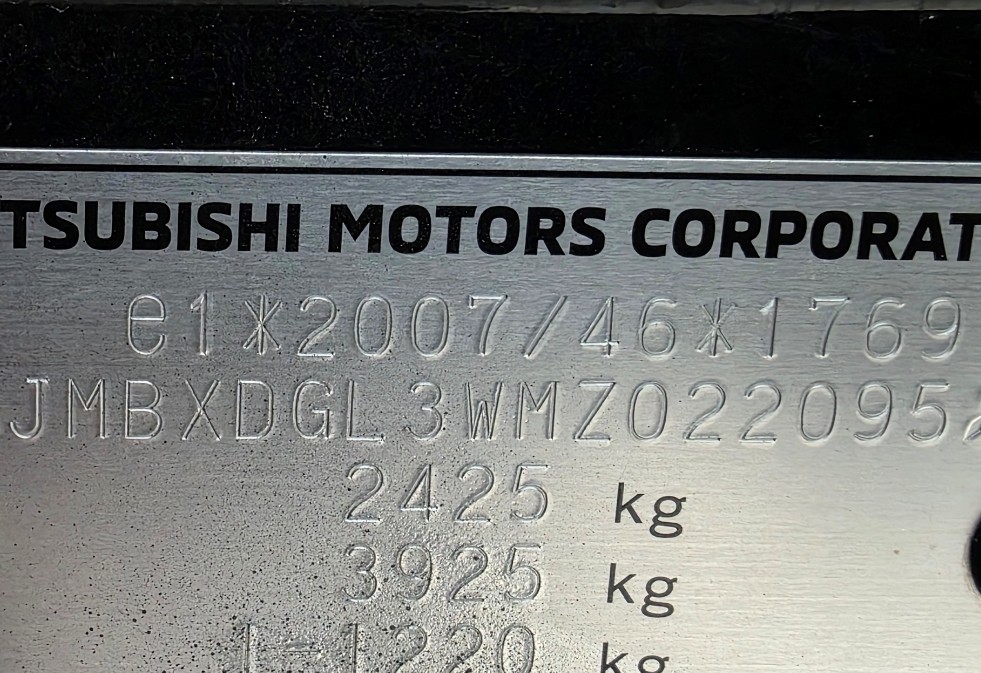
Mitsubishi Eclipse Cross PHEV, 2022, with FULL Extras.
The 2022 Eclipse Cross PHEV represents the facelifted second generation of this model. It arrived after Mitsubishi’s renewed focus on electrification (following the success of the Outlander PHEV) and offers a unique blend of compact SUV practicality with a sophisticated plug-in hybrid system.
Vehicle Overview
| Attribute | Details |
|---|---|
| Model | Mitsubishi Eclipse Cross PHEV (Facelift) |
| Year | 2022 |
| Drivetrain | Plug-in Hybrid Electric Vehicle (Series/Parallel Hybrid) |
| Layout | Twin-motor 4WD (one front, one rear – no mechanical prop shaft) |
| Engine | 2.4L Atkinson-cycle 4-cylinder petrol (petrol) |
| Electric Motors | Front: 60 kW (82 hp) | Rear: 70 kW (95 hp) |
| Battery | 13.8 kWh lithium-ion (liquid-cooled) |
| Electric Range (WLTP) | ~45-55 km (realistic: 35-45 km) |
| Fuel Consumption (hybrid mode) | ~1.7-2.0 L/100 km (when charged) | ~6.0-6.5 L/100 km (as hybrid) |
| System Power | ~188 hp (combined) |
| 0-100 km/h | ~8.5-9.0 seconds |
| Type of „FULL Extras“ | Panoramic roof, HUD, premium sound, heated/Ventilated seats, 360° cameras, etc. |
Note on „FULL Extras“: This typically includes the top trim level (e.g., „Instyle+“) with all option boxes ticked. We will cover the full suite of premium features.
Key Benefit #1: Unique Super-Full „E-Assist“ 4WD System (S-AWC)
Unlike most compact SUVs that are front-wheel drive with an „on-demand“ rear axle, the Eclipse Cross PHEV uses two independent electric motors (front and rear). There is no mechanical connection between the axles.
| Feature | How It Works | Benefit |
|---|---|---|
| Twin-motor 4WD | Rear motor operates independently of the engine | Instant torque to all four wheels, no lag from a transfer case |
| S-AWC (Super All-Wheel Control) | Integrated control of brakes, motors, and torque vectoring (via brakes) | Exceptional stability on snow, ice, and wet roads |
| Active Yaw Control | Applies selective braking to the inside wheels during cornering | Reduces understeer, improves cornering grip (unique in this class) |
| Snow Mode | Optimizes motor torque and regenerative braking for low-grip surfaces | Confident winter driving without needing a „proper“ 4×4 |
Benefit: You get genuine all-weather, all-surface capability. This is not a „soft-roader“ – the S-AWC system is derived from Mitsubishi’s rally and off-road heritage (Lancer Evolution, Pajero). It is significantly more capable than a Toyota C-HR Hybrid or Kia Niro PHEV.
Key Benefit #2: Extremely Low Running Costs (Fuel & Tax)
The PHEV drivetrain offers the best of both worlds: electric commuting and petrol range for long trips.
| Scenario | Fuel Consumption | Cost per 100 km (EU, €1.70/L petrol, €0.25/kWh elec) |
|---|---|---|
| Daily Commute (<45 km) | 0 L (electric only) | ~€2.50-3.00 (electricity) |
| Long Trip (hybrid mode) | ~5.5-6.5 L/100 km | ~€9.50-11.00 |
| Long Trip (charging en route) | ~2.0 L/100 km + electricity | ~€6.00-7.00 |
Tax Benefits (EU Country Dependent)
| Benefit | Typical Value |
|---|---|
| Company car tax (BIK) | Very low (often 8-12% vs 25-35% for petrol/diesel) |
| Road tax (VED) | €0-50/year (many countries exempt or severely reduce PHEV tax) |
| Congestion charges | Exempt or discounted (e.g., London ULEZ, Paris, Milan) |
| Free/cheap parking | Many cities offer free parking for PHEVs |
Benefit: If you can charge at home or work, your daily fuel cost drops to ~€0.03/km (electricity) vs ~€0.12-0.15/km for a petrol SUV. Over 15,000 km/year (half electric), you save €1,000-1,500 annually.
Key Benefit #3: „FULL Extras“ – Premium Equipment Package
The 2022 Eclipse Cross PHEV with full extras comes extremely well-equipped. Here is what „FULL Extras“ typically includes on the top trim (Instyle+ / similar):
| Category | Feature | Benefit |
|---|---|---|
| Audio & Media | Bose Premium Sound System (9 speakers, subwoofer) | Excellent sound quality for the class |
| Comfort | Heated front seats + Ventilated front seats | Year-round comfort (rare in this segment) |
| Comfort | Heated rear seats (outboard) | Passenger comfort in winter |
| Comfort | Heated steering wheel | No cold hands in winter |
| Roof | Panoramic sunroof (large fixed glass roof) | Airy cabin, rear passenger enjoyment |
| Visibility | Head-Up Display (HUD) | Speed, navigation, and safety alerts in your line of sight |
| Visibility | LED Matrix Headlights (with auto high beam) | Excellent night visibility |
| Parking | 360° Multi-Around Monitor (bird’s-eye view) | Easy parking in tight EU spaces |
| Parking | Front & rear parking sensors | Audio + visual warnings |
| Convenience | Power tailgate (hands-free kick sensor) | Easy loading when hands are full |
| Convenience | 8-inch Smartphone-link Display Audio (SDA) with wireless Apple CarPlay / Android Auto | Seamless phone integration |
| Convenience | Wireless phone charging pad | No cables cluttering the cabin |
| Driver assist | MI-PILOT (Mitsubishi’s Level 2 semi-autonomous driving) | Adaptive cruise + lane centering (stop & go) |
| Driver assist | Blind Spot Warning + Rear Cross Traffic Alert | Safer lane changes and reversing |
| Interior | Leather/synthetic leather upholstery (suede/leather combo) | Premium feel, easy to clean |
| Interior | Ambient interior lighting | Premium night-time ambience |
Checklist for „FULL Extras“: Verify the car has the Bose audio, 360° camera, panoramic roof, heated steering wheel, and head-up display. These are the key differentiators from mid-spec trims.
Key Benefit #4: Practical Compact SUV Size (Perfect for Europe)
The Eclipse Cross sits between the small (Renault Captur) and compact (Tucson) SUV segments.
| Dimension | Measurement | Benefit |
|---|---|---|
| Length | ~4,545 mm | Fits in standard EU parking spaces (even underground garages) |
| Width | ~1,805 mm | Narrow enough for tight city streets |
| Height | ~1,685 mm | Good visibility, easy entry/exit |
| Boot space (seats up) | ~359 litres (PHEV; slightly less than non-PHEV due to battery) | Adequate for weekly shopping, two suitcases |
| Boot space (seats folded) | ~1,150 litres | Fits large items (IKEA furniture, bicycles with front wheel off) |
| Rear legroom | Excellent for class (sliding rear seats) | Adults can sit comfortably behind tall driver |
Unique feature: The rear seats slide fore/aft (by ~200 mm) and recline. This allows you to trade between boot space and rear legroom – rare in this class.
Key Benefit #5: CHAdeMO Fast Charging (Aging but Useful)
The Eclipse Cross PHEV uses CHAdeMO for DC fast charging (not CCS, which is now European standard).
| Charging Type | Speed | Time (0-80%) |
|---|---|---|
| Standard wallbox (AC, 3.7 kW) | 3.7 kW onboard charger | ~3.5 hours |
| Public AC (Type 2, 7 kW) | 3.7 kW (limited by onboard charger) | ~3.5 hours |
| DC Fast Charging (CHAdeMO, 50 kW) | ~30-40 kW (battery limited) | ~25-30 minutes |
Benefit: While most new EVs use CCS, CHAdeMO chargers are still common in Europe (especially in France, Belgium, Netherlands, and Japan). You can top up quickly on road trips.
Drawback: CHAdeMO is declining. New rapid chargers are CCS-only. For a 2022 PHEV with a small battery (13.8 kWh), fast charging is less critical – you will mostly charge at home/work.
Key Benefit #6: Unique Design (Love It or Hate It – But Distinctive)
The 2022 facelift improved the controversial rear design.
| Styling Element | Pre-Facelift (2018-2020) | 2022 Facelift |
|---|---|---|
| Rear light bar | Split into two sections | Full-width LED light bar (much cleaner) |
| Front grille | Chrome-heavy | Dark chrome, sportier |
| Overall look | Polarizing („broken windshield“ rear) | More mainstream, still unique |
Benefit: The Eclipse Cross stands out in a sea of lookalike SUVs (Tiguan, Karoq, Sportage). You won’t struggle to find it in a car park. The facelift fixes the most criticized design element (the split rear window).
Key Benefit #7: Mitsubishi 5-Year Warranty (Transferable)
Mitsubishi offers one of the best warranties in Europe.
| Warranty Coverage | Duration | Details |
|---|---|---|
| New Vehicle Warranty | 5 years / 100,000 km (varies by country – check local) | Bumper-to-bumper |
| PHEV Battery Warranty | 8 years / 160,000 km (often) | Covers capacity loss below 70% |
| Paint & Perforation | 12 years | Rust protection |
Benefit for 2022 model in 2026:
New vehicle warranty: Likely 1-2 years remaining (if 5-year/100k km policy).
Battery warranty: ~4 years remaining (until 2030 or 160k km).
This is significantly better than many competitors (Kia/Hyundai have 7-year warranties, but Mitsubishi’s is still competitive and transferable).
Key Benefit #8: Low Depreciation (Compared to Premium EVs)
PHEVs have depreciated, but the Eclipse Cross PHEV holds value better than many due to its unique 4WD system and Mitsubishi’s reputation for reliability.
| Car (2022 model, 2026 used price) | Approximate Price (€) | Depreciation |
|---|---|---|
| Mitsubishi Eclipse Cross PHEV (full extras) | €28-34k | ~30-40% |
| Toyota C-HR PHEV | €30-36k | ~30-35% |
| Kia Niro PHEV | €25-30k | ~40-45% |
| VW Tiguan eHybrid | €32-38k | ~35-40% |
| BMW X3 xDrive30e | €45-55k | ~40-50% |
Benefit: You get a well-equipped, capable PHEV for significantly less than German rivals, with similar (or better) reliability.
Key Benefit #9: Genuine 4WD Capability (Not Just Badge Engineering)
Most compact PHEV SUVs (e.g., C-HR PHEV, Niro PHEV, Tiguan eHybrid) are front-wheel drive only. The Eclipse Cross PHEV has a dedicated rear electric motor providing true 4WD.
| Capability | Eclipse Cross PHEV | FWD PHEV Competitors |
|---|---|---|
| Snow traction | Excellent (twin motor, S-AWC) | Poor (front wheels spin) |
| Wet grass / muddy campsites | Confident | Likely to get stuck |
| Steep wet driveways | No issues | Front wheel slip common |
| Trailer towing stability | Better (rear motor pushes) | Poor (nose-heavy) |
| Off-road (light) | Gravel tracks, forest roads | Not recommended |
Benefit: If you live in a snowy region (Alps, Scandinavia, Eastern Europe), drive to ski resorts, or tow a small trailer/caravan, the Eclipse Cross PHEV is genuinely more capable than almost any other compact PHEV.
Key Benefit #10: Efficient Hybrid Mode (Even When Battery is „Empty“)
Unlike some PHEVs that become very inefficient once the battery is depleted, Mitsubishi’s series-parallel system works well as a conventional hybrid.
| Driving Condition | Fuel Consumption (L/100 km) |
|---|---|
| Battery fully charged | 0 (electric) |
| Battery depleted (city driving) | ~4.5-5.5 |
| Battery depleted (highway 120 km/h) | ~6.0-7.0 |
| Battery depleted (country roads 80 km/h) | ~5.0-6.0 |
Benefit: Even if you never plug in (not recommended), you still get ~5.5-6.5 L/100 km – better than a non-hybrid petrol SUV (~8-10 L/100 km). The car does not become a „heavy petrol guzzler“ when the battery runs out.
Key Benefit #11: V2L (Vehicle to Load) Capability
The 2022 Eclipse Cross PHEV includes V2L (Vehicle to Load) via the CHAdeMO port (using an adapter).
| Feature | Capability |
|---|---|
| Power output | Up to 1.5 kW (1500W) |
| Use cases | Camping (lights, fridge), power tools, emergency home backup |
| Battery capacity | 13.8 kWh – can run a 100W fridge for ~100 hours |
Benefit: You can use the car as a mobile generator. This is rare in the PHEV compact SUV class and excellent for camping, tailgating, or power outages.
Key Benefit #12: Reliable Powertrain (Derived from Outlander PHEV)
Mitsubishi has been building PHEVs since 2013 (Outlander PHEV). The Eclipse Cross PHEV uses a mature, highly refined system.
| Component | Reliability | Notes |
|---|---|---|
| 2.4L Atkinson engine | Excellent | Proven, simple, low-stress design |
| Electric motors | Very good | Liquid-cooled, no brushes to wear |
| Battery (13.8 kWh) | Good | Liquid-cooled (unlike air-cooled Leaf), degrades slowly |
| S-AWC system | Very good | Derived from Lancer Evolution |
| Transmission | None (direct drive + series hybrid) | No complex gearbox to fail |
Benefit: This is not a first-generation experiment. Mitsubishi has sold over 300,000 PHEVs globally. The Eclipse Cross benefits from a decade of refinement.